
- SOLUTIONS
-
- Countries
- Stories
- About Us
-
-
- HOW CAN WE HELP?
- Find out how we can assist you to achieve higher growth through services that are tailored to your company needs.
-
- GLOBAL INSIGHTS
If you’re looking for a partner to help you with your global expansion plans, INS Global is the ideal choice. Through our PEO services, you can set up, hire, and expand to over 160 countries while cutting through the red tape and costs of expanding abroad.
A PEO in Lithuania is the perfect way to access local expertise in a safe, quick, and cost-effective way. INS Global provides PEO services in Lithuania that let you recruit and manage HR services for employees in-country in just a few days.
An Employer of Record in Lithuania acts as the legal employer of your workers on your behalf and handles all the complex, local employer responsibilities and compliance assurance. This is incredibly useful for companies that are looking to expand their operations globally safely and cost-effectively. INS Global’s EOR in Lithuania streamlines the entire process to allow businesses to expand in less than 48 hours.
PEOs have local experience and knowledge to help meet even the most complex national and regional regulations. This ensures that you’re compliant with every aspect of local labor law in a simple, efficient, and cost-effective way.
Working with a PEO allows you to outsource your HR and prevent costly fees and fines when entering a new market. The local expertise helps keep you compliant while cutting through red tape and saving you from costly errors.
PEOs allow you to outsource your payroll, recruitment, headhunting, and even contractor management with a simple and elegant solution. This empowers your company to focus on expanding abroad with a local partner that understands the market.
When you expand abroad with a PEO, you can drastically reduce the time needed to launch in a new market. While starting a new entity abroad can take anywhere between 4 to 12 months, working with a PEO streamlines the process to under a week.
A PEO handles every aspect of HR and simplifies everything through a single platform. INS Global offers a streamlined, cloud-based solution that lets you control every aspect of your HR, from anywhere in the world.
Incorporating a company in a foreign country is a complicated and time-consuming process that requires a legal and physical presence in that market. A PEO streamlines this process and allows you to operate in new markets without establishing a formal entity there.
Working with a PEO…
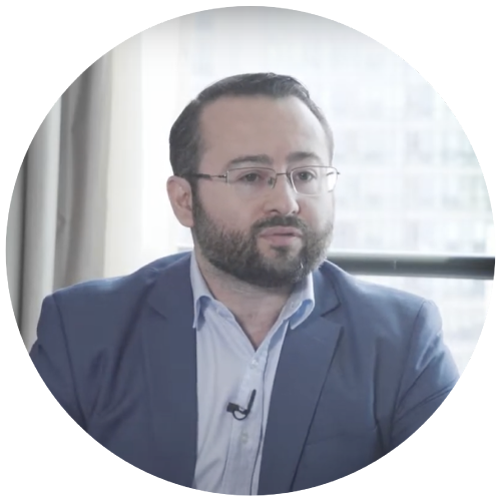
Manuel Ramos
TERAO ASIA
Managing Director
We think INS Global is a good solution about starting in a market like China. Understanding the market doesn’t mean you need to set up a company immediately.
INS Global’s PEO manages employee recruitment and management in four simple steps.
When expanding into a new country, it helps to work with a PEO (Professional Employment Organization) or an EOR (Employer of Record). As the two services are often discussed together, here’s a quick guide to the differences between these two options.
No, it’s necessary to use a local entity to employ staff to comply with local labor laws.
Foreign companies can be set up in every country, but you can make use of local PEO services to hire local staff directly.
The liabilities of the Employer of Record can vary from one country to another. However, these responsibilities cover liability for all staff management tasks including payroll management, tax compliance, social security management, and hiring procedures.
Expanding abroad can take a matter of days with a PEO. Lithuania has a company incorporation process which can take anywhere from 4 to 12 months.
A high-quality Lithuanian PEO takes care of all the HR functions for your company. This includes hiring, payroll, tax compliance, and more. All these services are offered for a single monthly fee that’s based on the salary of your employed workers.
EORs offer you a safe, legal way to expand abroad in a fraction of the time. This option is completely legal and helps save you time and money, allowing you to focus on growing your business internationally.
Salaries and payroll in Lithuania are typically paid twice per month. However, some companies prefer to pay monthly. Employers are responsible for deducting payroll taxes and other social contributions on behalf of their staff.
Recruiting and employing new workers in Lithuania includes more than just paying a monthly salary. Working with a PEO streamlines the entire process, drastically reducing recruitment costs.
Yes. While some districts may have varying rules and regulations, a local PEO has the experience and knowledge to hire staff everywhere in Lithuania.
All changes to employment contracts in Lithuania have to be agreed upon with the employee in question. Working with a local PEO in Lithuania makes this process seamless by handling all the paperwork and HR-related tasks for you.
Employers in Lithuania are responsible for creating a safe working environment, managing payroll deductions, and ensuring that all employment contracts meet national standards.
Yes. Employers in Lithuania are responsible for deducting payroll taxes and other social contributions every month.
While some PEOs may have minimums and maximums that you can employ abroad, INS Global builds a service package that caters to your exact needs. We can provide HR for as many or as few workers as you need for your expansion strategy.
The cost to fire an employee can vary depending on the reason for their termination. Severance pay of up to 6 months may be required if the employee hasn’t done anything wrong and is fired unjustly.
Both in-person and remote work options are available in Lithuania. This can help speed up your expansion without having to worry about the costs of running an office yet.
Absolutely! Our recruitment experts have the experience needed to find the right talent for your business. While recruitment is usually expensive, INS Global streamlines the process so that you can expand your business efficiently.
There are 15 paid national holidays in Lithuania, with employees also getting an hour off the day before every holiday. If an employee works on a national holiday, they are entitled to double pay.
Lithuania has many worker protections included in its labor laws to help improve the working environment in the country. While this is not perfect yet, major improvements have been made over the last few years.
Employers in Lithuania must navigate complex labor and business regulations to stay compliant. This is why it’s always a great idea to work with a local PEO in Lithuania which has the knowledge and expertise to guide you in the right direction.
Yes! INS Global can help you simplify and streamline all your employment functions for both Lithuanian and foreign employees.
Level 39, Marina Bay
Financial Centre Tower 2,
10 Marina Boulevard
Singapore 018983

